UGA Electrical EngineeringClass of 2028
I build software for engineering problems: interactive simulations, evaluation tools, and the interfaces that make them usable.
Electrical Engineering student at the University of Georgia. Recent work: an attack-path simulation of a school network you can explore in 3D, a full-stack dashboard for testing language models, and a face-verification benchmark. I also build hardware, from competition robots to embedded firmware.
Projects
Each card opens a short case study with my role, the evidence and the limits.
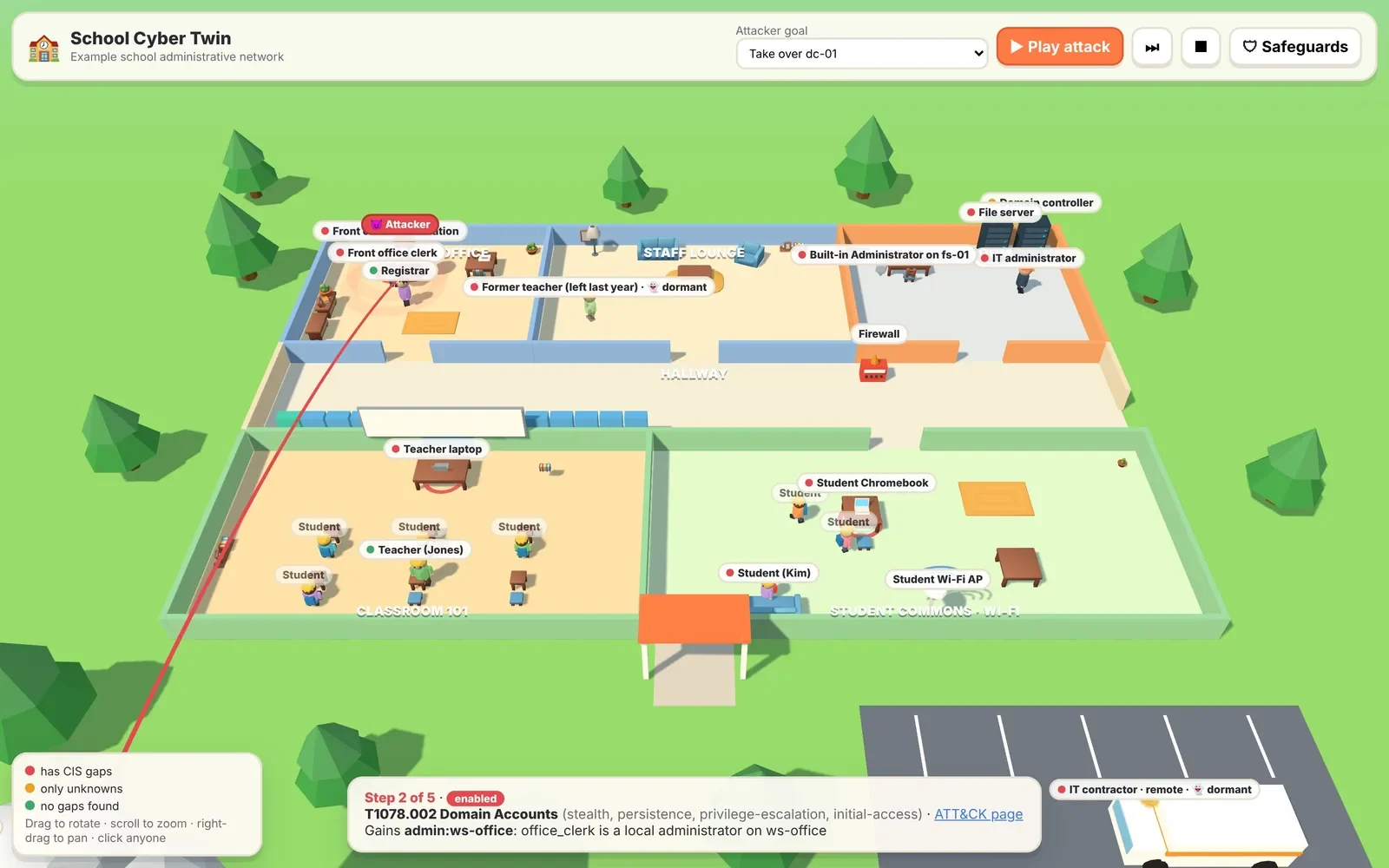
School Cybersecurity Digital Twin
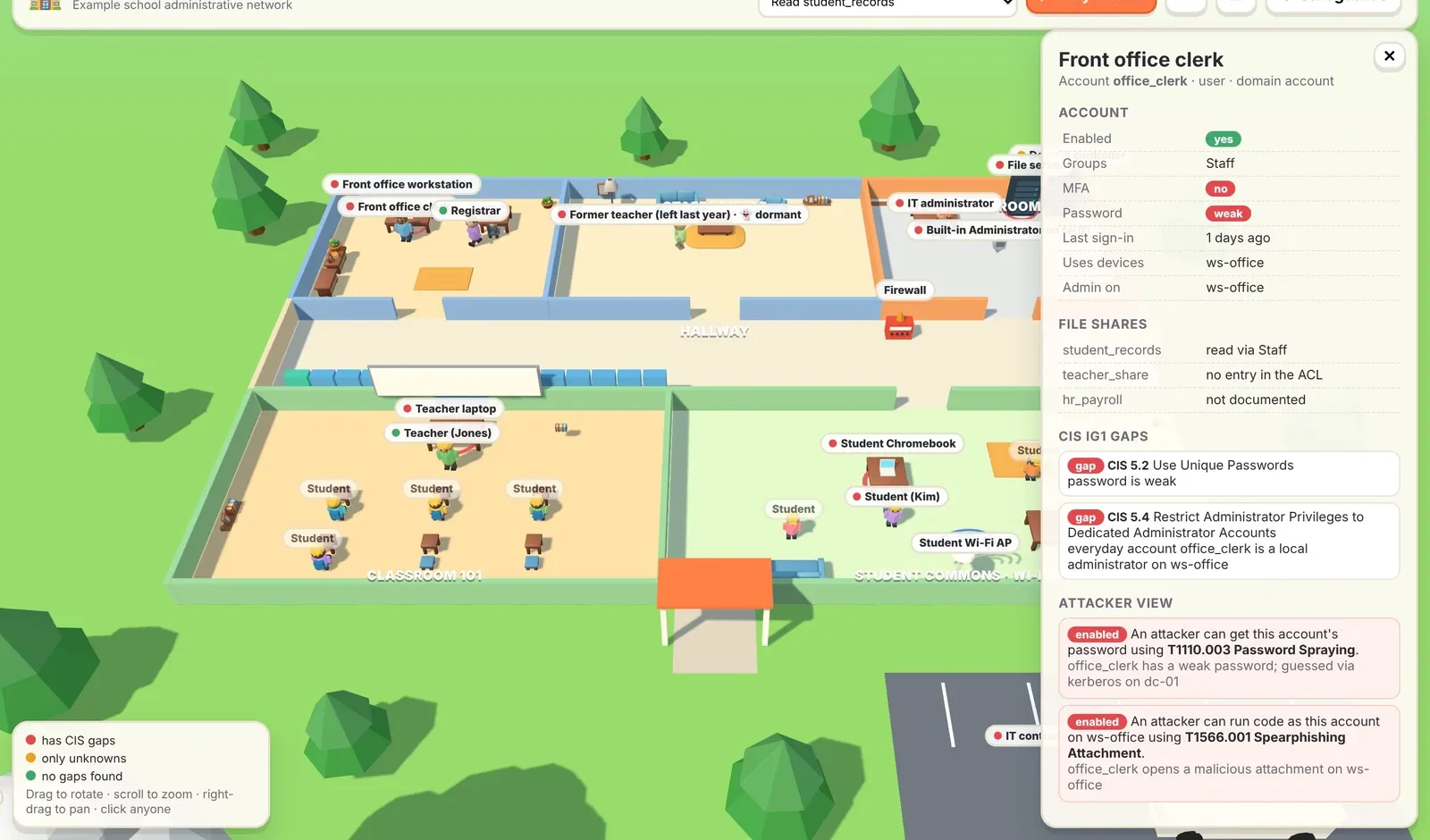
A model of a fictional school network that answers “can this account reach this data?”, chains those answers into attack paths tagged with MITRE ATT&CK, and replays them in a clickable 3D school.
- My part
- My undergraduate research project: I wrote the Python reasoning engine, the Streamlit app and the three.js 3D school.
- Result
- In the example school it finds a six-step path to the domain controller and shows that one safeguard on its own (CIS 5.4) breaks it.
- Python
- NetworkX
- three.js
- Pyodide
AI Model Testing Dashboard
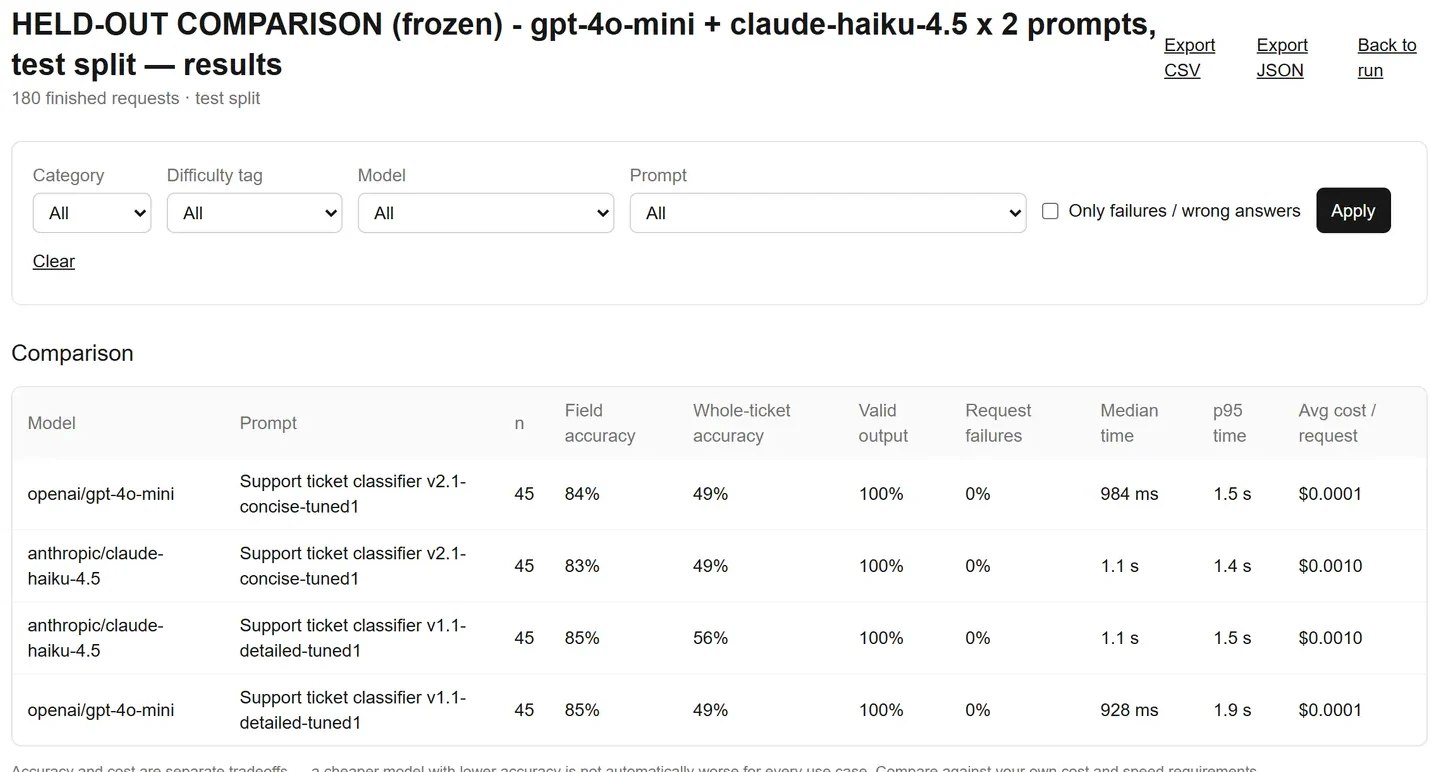
A tool for choosing a language model on evidence: it runs prompt-and-model experiments in the background, scores every answer field by field, and keeps accuracy, latency and cost side by side.
- My part
- Solo project: I built the setup screen, background runner, scoring, results views and exports, with 59 unit tests on the decision logic.
- Result
- A held-out run of 180 real requests all returned valid output. Accuracy was too close to call on 45 tickets; the clear difference was cost, about 10× per request.
- Next.js
- TypeScript
- PostgreSQL
- Vercel AI SDK
Face-Verification Model Evaluation
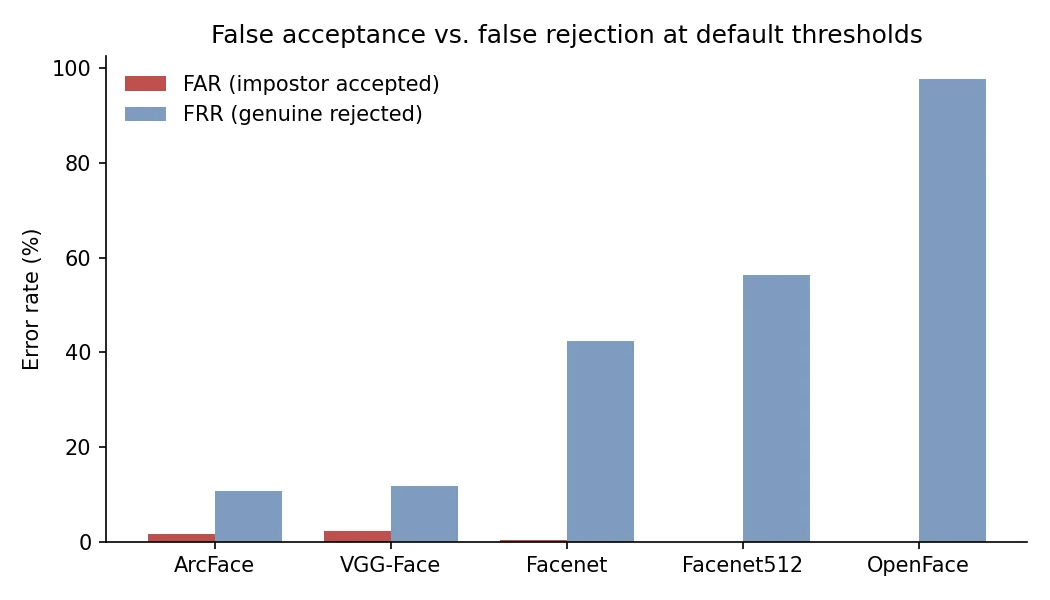
How do five widely used pretrained face-verification models compare when they run through the same pipeline on the same benchmark, judged on false acceptances and false rejections, not accuracy alone?
- My part
- My undergraduate research: the pair generation, evaluation scripts, threshold sweep and analysis, published as a repository anyone can rerun.
- Result
- 50,000 verifications (5 models × 10 runs × 1,000 random pairs). ArcFace led at 93.8% ± 0.8 accuracy with 1.6% false acceptance at its default threshold.
- Python
- DeepFace
- LFW
- Matplotlib
Experience
- Nov 2025 — present
Undergraduate Research AssistantUGA Multispectral Imagery Lab
Face-verification model evaluation (Jan–Apr 2026); now the school cybersecurity simulation.
- Aug 2026 — present
Embedded Systems Group LeadUGA Intelligent Power Electronics & Electric Machine Lab · EV project
Leading the embedded systems group of an undergraduate electric-vehicle build.
- Aug 2026 — present
R&D Embedded Systems TeamUGA IEEE Micromouse
Learning bare-metal STM32 firmware for an autonomous maze-solving robot.
- Summer 2026
AI & IT Project Management InternWinmate Communication US Inc. · Smyrna, GA
Reviewed product lines and use cases for rugged computers; trained in product testing, assembly and OS updates; helped digitize technical documentation.
- 2022 — 2025
Chief EngineerWalton Robotics 2974 · FIRST Robotics Competition
High-school competitive robotics program.
- University of Georgia
- B.S. Electrical Engineering · expected May 2028
- Georgia Tech · dual enrollment
- 2024–2025 · Linear Algebra, Multivariable Calculus, Object-Oriented Programming
More engineering
Supporting work, with its current status stated plainly.
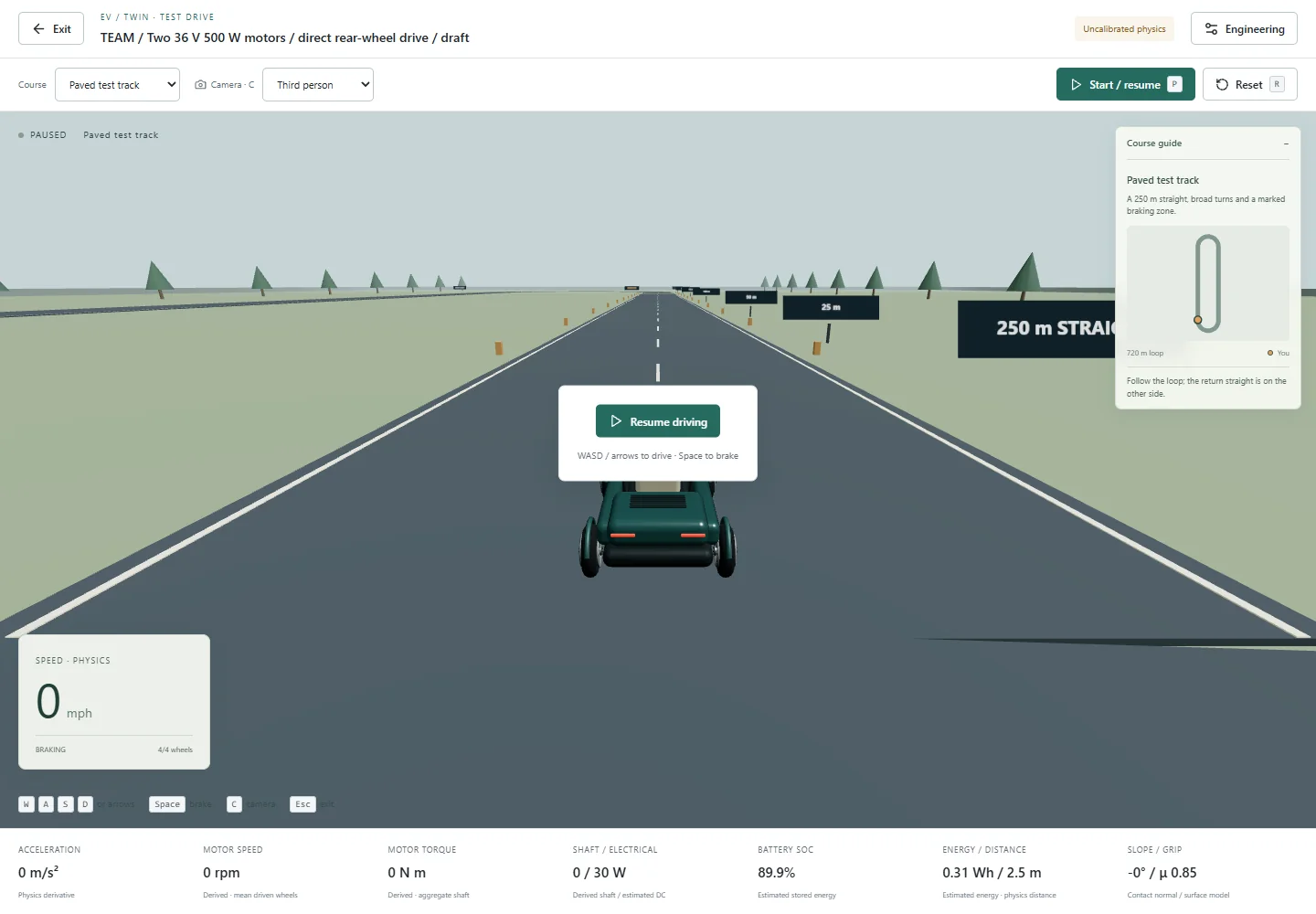
Electric Vehicle Project
UGA Intelligent Power Electronics & Electric Machine Lab · Prof. Jin Ye
An undergraduate team building an electric vehicle, with a team-built digital twin that estimates a design’s speed, acceleration and range before parts are bought.
Status: I was selected to lead the embedded systems group; the vehicle firmware is at an early stage. The team’s twin (public repo) simulates drive cycles, 0–60 and top speed for a candidate build. Simulated, with demo parts, not measured.
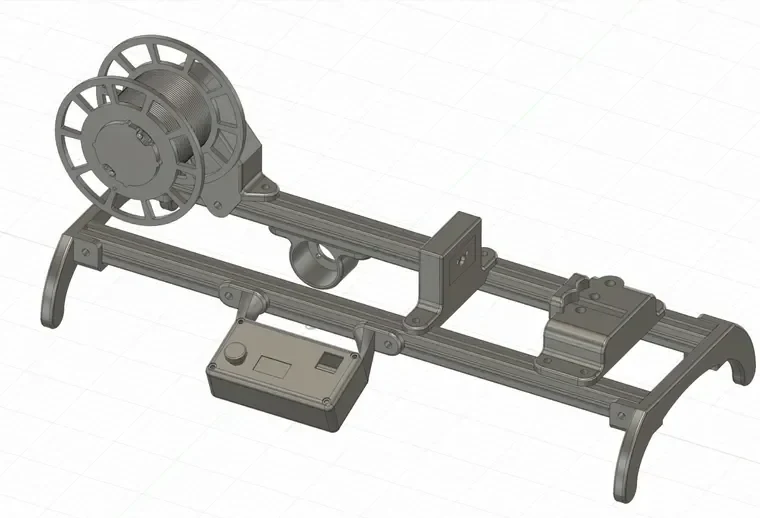
PET Bottle Recycler
Personal project · adapted from the open PET2Print design
A machine that cuts a plastic bottle into one long strip and pulls it through a heated nozzle to make 3D-printer filament.
Status: I printed and assembled the machine and am building and debugging its controller board. The printed parts are assembled into the full machine. The controller PCB doesn’t work yet, so no filament has been made.
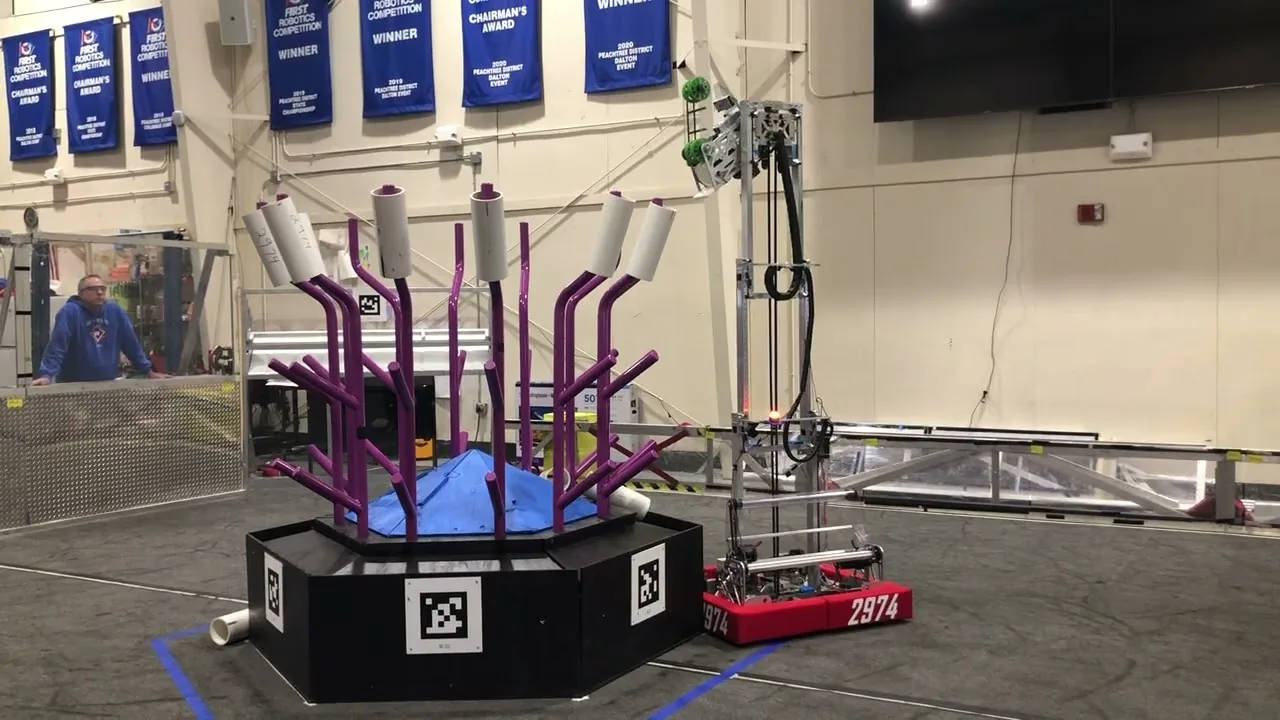
FIRST Robotics — Walton 2974
Walton High School, Marietta, GA
A competitive high-school robotics program. In 2025 the team designed a robot around the shortest possible scoring cycle and shared its process publicly.
Status: Chief Engineer from 2022 to 2025. The 2025 engineering shown here was a team effort. The team won the Dalton and Statesboro district events in 2025.
IEEE Micromouse
An autonomous maze-solving robot. I’m on the R&D embedded systems team, learning bare-metal STM32 firmware.
A little more about me
I started building on my high-school robotics team, where I spent four seasons and finished as Chief Engineer, and I co-founded a CAD club along the way. Since coming to UGA, more of what I make is software: tools that let you see inside a system, whether that’s a school network, a set of language models, or a face-verification pipeline.
Outside engineering, I teach Mandarin to toddlers at The Language Nook in Athens, mostly through songs, stories and play.