The project
The EV project runs out of Prof. Jin Ye’s Intelligent Power Electronics & Electric Machine Lab at UGA. Students split into groups by subsystem and build a working electric vehicle together. I was selected to lead the embedded systems group.
The embedded plan
These are the group’s plans and starting point. They describe intended work, not finished firmware.
- Controller: an ESP32 programmed in Arduino C++, driven by phone remote control
- Interfaces: GPIO, PWM for motor drive, UART and I2C for sensors
- A failsafe stop as a hard requirement
- A shared starter repository for the embedded group
The team’s digital twin
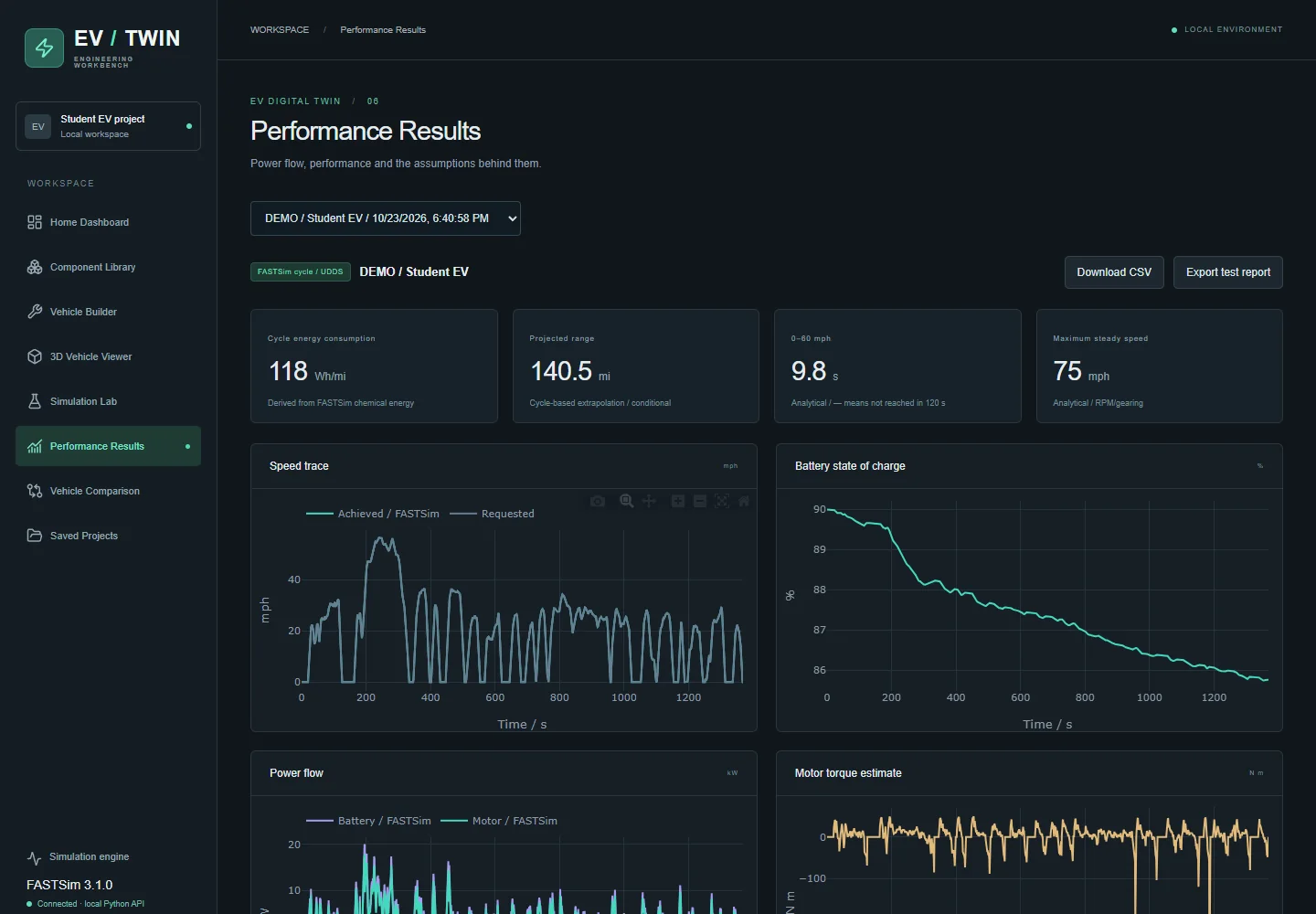
Parts cost money and lead time, so the team built EV / Twin, a local workbench for trying a car in software first. A build is assembled from a component library (each part carries its specs, units and price), and the app runs it through the FASTSim 3.1.0 vehicle model to estimate top steady speed, 0–60 time, energy per mile and range, with speed, battery and torque traces over standard drive cycles.
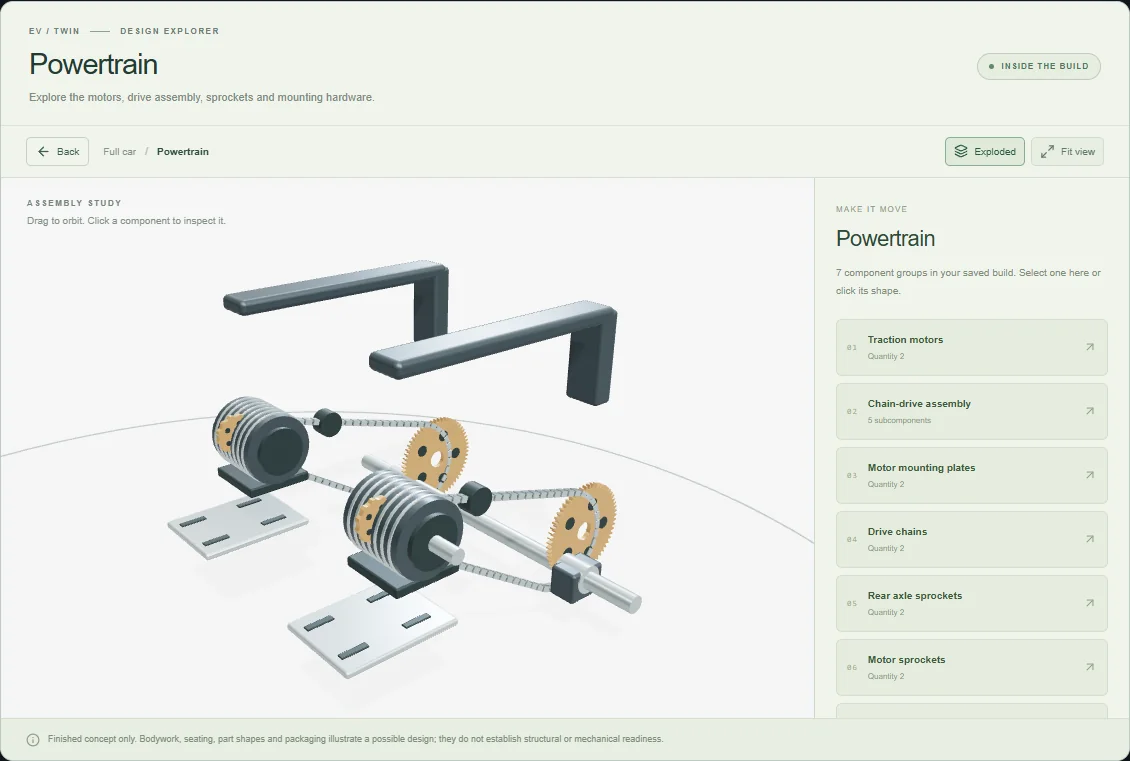
The 3D side is rough by design. It shows where systems sit and how the powertrain connects, and the selected build can be driven around several courses with live speed, torque, power and battery readouts.